
Table of Contents
- "Non-contact" Position Sensing with Magnetic Sensors
- Advantages of Position Sensing Using Linear Hall Effect Sensor ICs
- Magnets Suitable for Position Sensing (Rotation/Sliding Detection)
- Advantages of Non-Contact Position Sensing
- Alternative Uses - Application Examples for Rotational/Sliding Amount Detection
- Need Help with Magnetic Design?
- Try Out ABLIC's Linear Hall Effect Sensor ICs
1. "Non-Contact" Position Sensing with Magnetic Sensors
To achieve optimal position and angle detection, selecting the right sensor for your application and environment is essential.
Each typical detection method has its own advantages and disadvantages. The table below compares the three main detection methods.
| Detection Method | Key Advantages | Challenges/Considerations |
|---|---|---|
| Contact Type (Potentiometers, etc.) | Simple circuit structure | Physical wear and degradation over time Susceptible to contact failure and dust |
| Optical Type (Rotary Encoders, etc.) | High precision and high resolution Fast response speed | Susceptible to oil, water, and dust (optical contamination) Relatively high sensor cost |
| Magnetic Type (Hall Effect Switch ICs/ Linear Hall Effect Sensor ICs, etc.) | Non-contact design for long life and no wear Resistant to oil, water, and dust, allowing for sealed structures | Susceptible to interference from stray magnetic fields |
Why are "Magnetic Sensors" Selected for Position Sensing Today?
Magnetic sensors address the challenges of the contact-type and optical-type methods described above.
By detecting changes in magnetic flux density between the magnet and the sensor without physical contact, magnetic sensors offer the following advantages:
- Non-contact design and long service life: Eliminates friction and physical wear, significantly reducing the risk of mechanical failure.
- High environmental resistance: Enables detection through resin or glass, and can be built with a sealed structure (waterproof/dustproof) for stable operation even in harsh environments.
- Excellent cost performance: Obtains accurate position data with a simple setup, eliminating the need for expensive optical sensors.
Differences between "Hall Effect ICs (Hall Effect Switch ICs)" and "Linear Hall Effect Sensor ICs"
"Hall effect ICs" are popular magnetic sensors, broadly divided into two types depending on the detection method.
| Product Type | Detection Function | Output/Operation | Main Applications |
|---|---|---|---|
| Hall Effect IC (Switch Type) | Determines ON/OFF | Detects only whether the magnet has approached or moved away | Door open/close detection, lid lock verification |
| Linear Hall Effect Sensor IC | Continuously measures movement (distance or angle) | Output voltage changes continuously based on the position of the magnet | Pedal depression level, lever angle, control knob rotation angle |
Linear Hall effect sensor ICs are ideal for applications that require continuous measurement of movement, rather than simple ON/OFF determination.
From Replacing Switches to Detecting "Continuous Changes"
By utilizing linear Hall effect sensor ICs, multi-stage detection that previously required placing multiple switches (Hall effect ICs) side by side can be consolidated into a single IC. This reduces the component count while significantly increasing design flexibility.
This page introduces the specific advantages and application examples of position sensing using linear Hall effect sensor ICs.
2. Advantages of Position Sensing Using Linear Hall Effect Sensor ICs
Converting Magnetic Flux Density to Analog Voltage
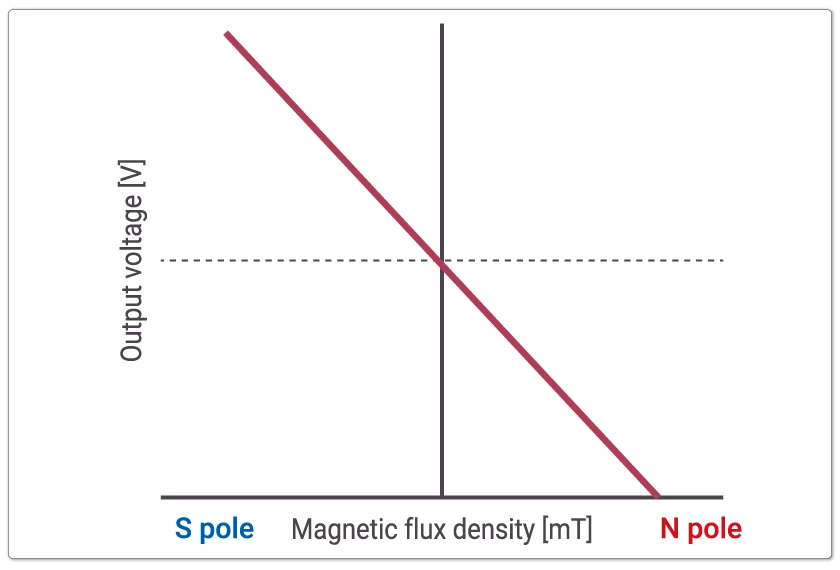
A linear Hall effect sensor IC detects the magnetic flux density of a magnet and outputs an analog voltage proportional to that level. By monitoring the magnetic flux density of a magnet placed on a moving part, it can detect even very small movements.
Depending on the magnet type (shape and magnetization pattern, such as horizontal or vertical orientation), it can be used in a wide range of applications, including linear and rotational position sensing.
This page introduces position sensing using ABLIC's single-axis linear Hall effect sensor IC S-5611A Series.
The S-5611A Series features a fast response, low noise, and a programmable output voltage gain, enabling highly accurate sensing.
Usability as Both a Current Sensor and a Position Sensor
A linear Hall effect sensor IC can function as both a current sensor and a position sensor.
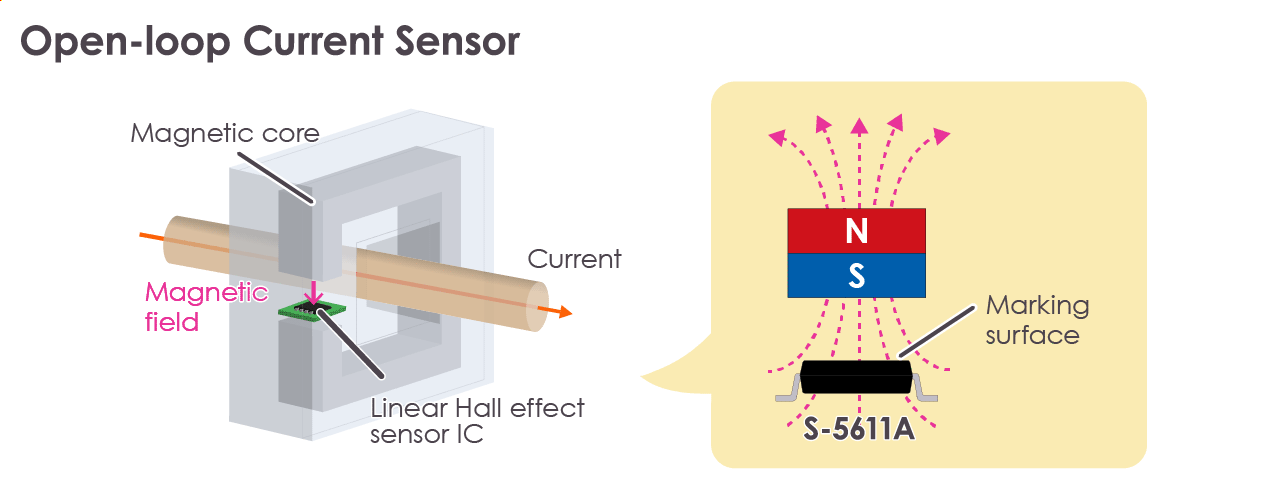
When Used as a Current Sensor
The IC detects the magnetic flux density generated in a wire via a soft ferrite core and outputs a corresponding analog voltage, which is then used to determine the current level.
When Used as a Position Sensor
A magnet is attached to a moving part, and the IC detects changes in magnetic flux density. As with current sensing, the IC outputs an analog voltage proportional to the magnetic flux density level.
In position sensing, selecting the appropriate magnet type enables control that responds to subtle changes in magnetic flux density. The direction of the magnet's magnetic force is called the magnetization direction, and it comes in two types: horizontal and vertical. By optimizing this magnetization direction together with the mechanical structure, various applications become possible, such as linear and rotational position sensing.
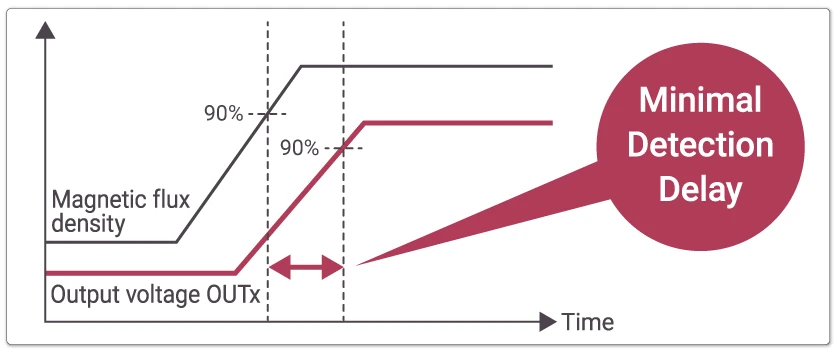
Compared to ICs that use DSP (Digital Signal Processor) processing, such as those used for absolute angle sensors, a major advantage of the S-5611A is its much faster detection speed because it processes signals in the analog domain. This industry's top-class*1 fast response (1.25μs*2) significantly contributes to reducing detection delay time.
Furthermore, because sensors requiring DSP processing involve higher costs, using the S-5611A also helps optimize overall system cost.
*1 Based on our research *2 Value in the 400kHz frequency bandwidth
Response Time Comparison with Absolute Angle Sensors Featuring DSP and Other Digital Computation Functions
| IC Category | Linear Hall Effect Sensor IC (S-5611A, ABLIC) | Absolute Angle Sensor (Company A) | Absolute Angle Sensor (Company B) |
|---|---|---|---|
| Equivalent to Detection Delay Time (typ.) | 1.25μs | 100μs (Propagation delay) | 290μs (Refresh rate) |
3. Magnets Suitable for Position Sensing (Rotation/Sliding Detection)
Magnets Suitable for Rotation Detection
Magnets for rotation detection are circular magnets magnetized so that the S and N poles are distributed from the center.
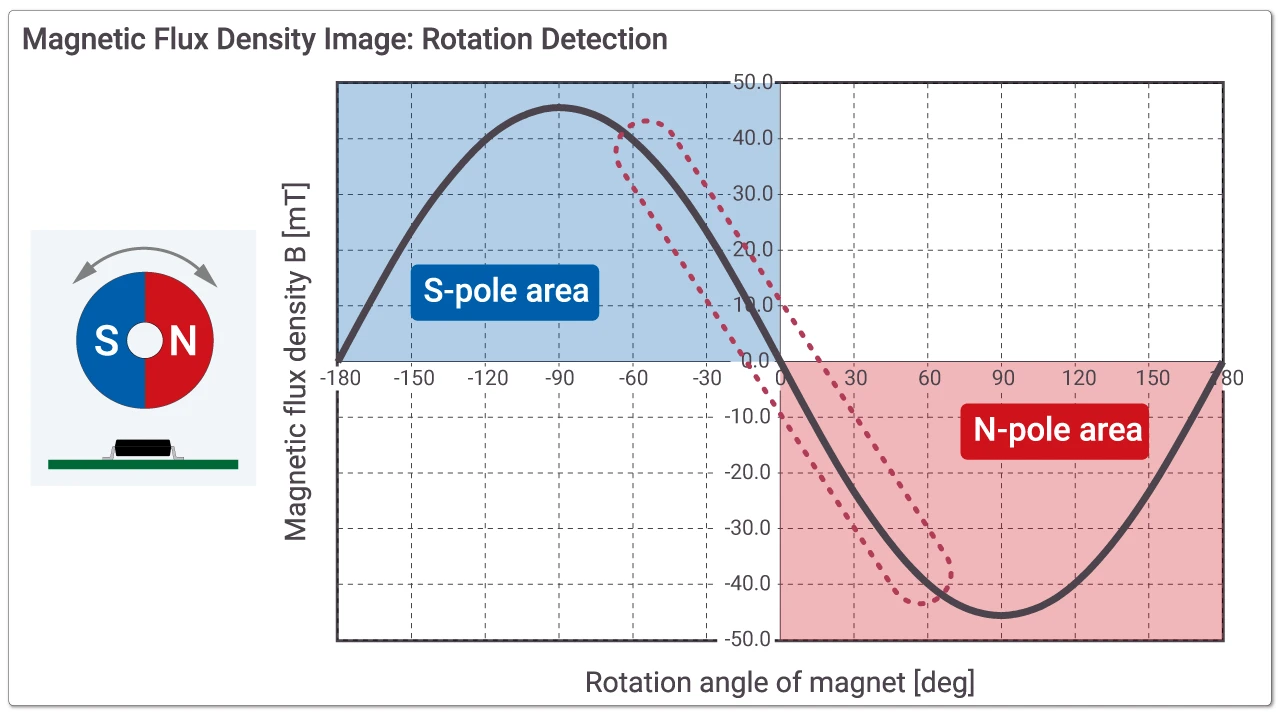
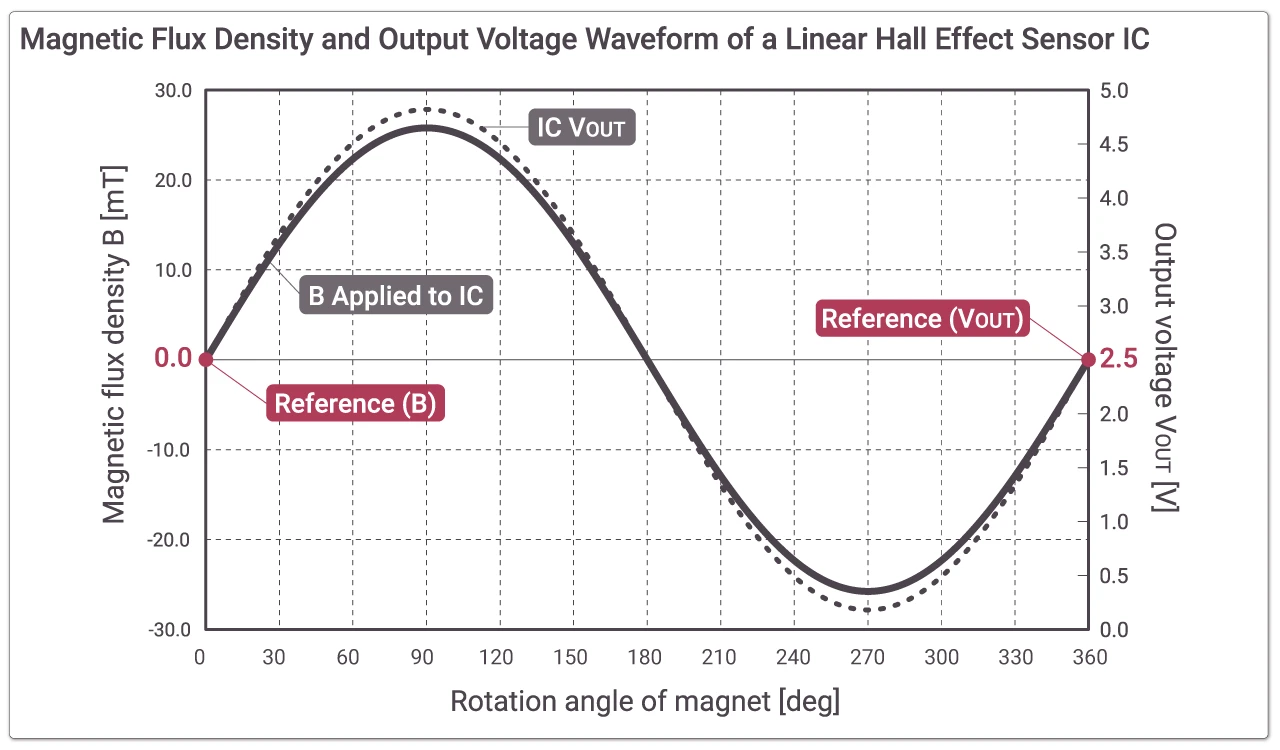
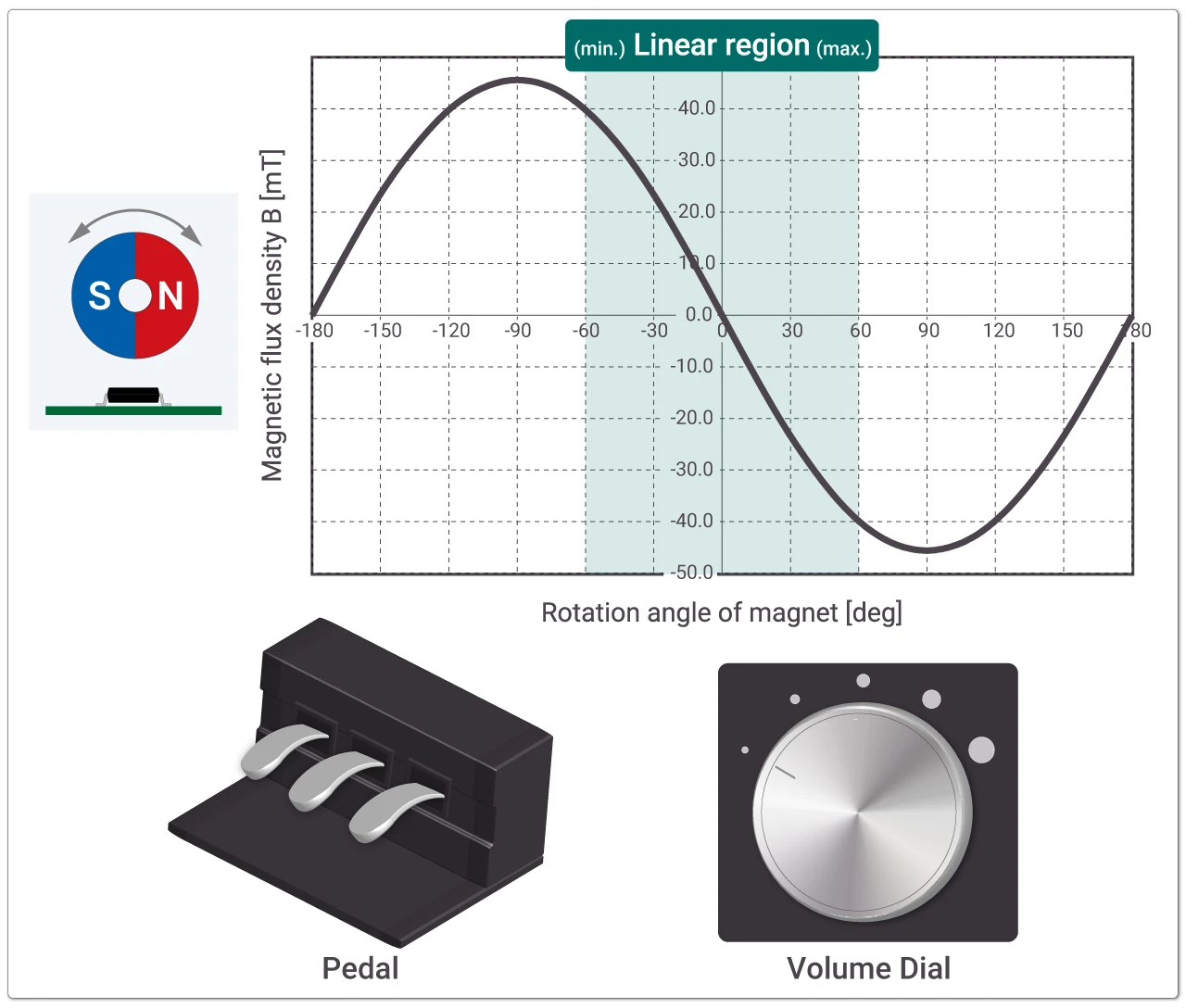
When the magnet rotates one full turn, the magnetic flux density detected by the linear Hall effect sensor IC follows a sine curve. For position detection, the highly linear portion around the center voltage of the output waveform is used. The linear voltage (analog voltage) output is centered at the center voltage (default 2.5V), where the S pole produces a positive deviation, and the N pole produces a negative deviation.
Within a rotation angle of approximately 120° or less, the IC can serve as a lower-cost alternative to absolute angle sensors or rotary encoders, helping reduce overall system cost.
Magnetic Flux Density Received from Magnet vs. Output Voltage
The figure below illustrates the relationship between the magnetic flux density applied to the linear Hall effect sensor IC (S-5611A) and its corresponding output voltage. The solid line represents the magnetic flux density applied to the IC, and the dashed line represents the IC's output voltage.
The output voltage is centered around a reference voltage of 2.5V (2.5V ± 2.5V).
In this example, when the IC receives a maximum magnetic flux density of approximately 26mT, it outputs about 4.8V with a gain setting of 90mV/mT. This means that the output voltage changes by 90mV for every 1mT change (increase or decrease) in the magnetic flux density applied to the IC.
*The reference voltage is programmable.
Magnets Suitable for Sliding Detection
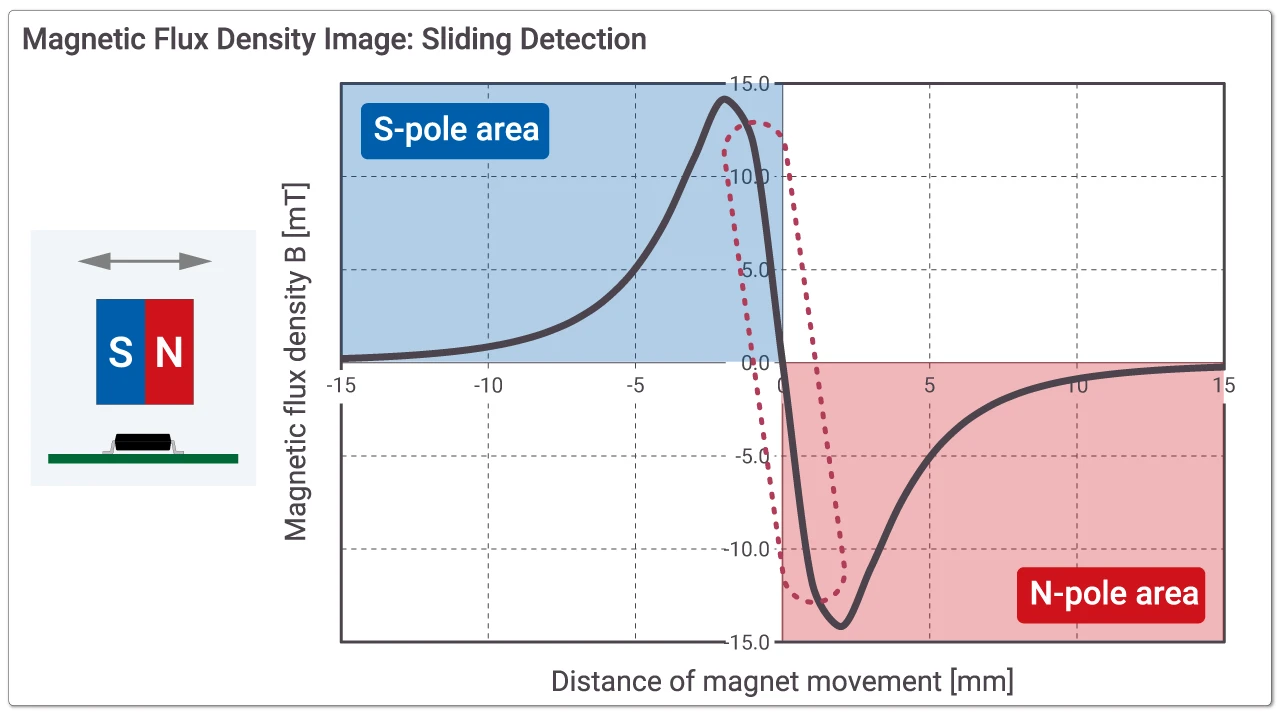
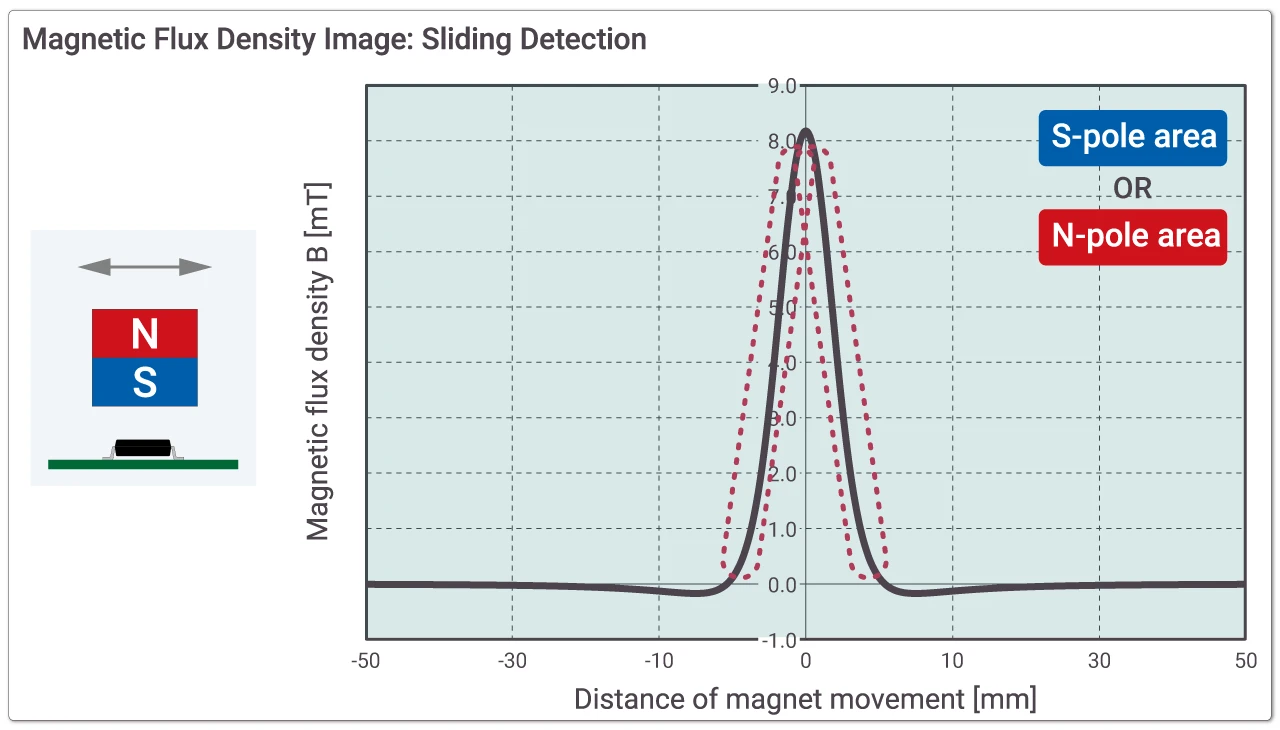
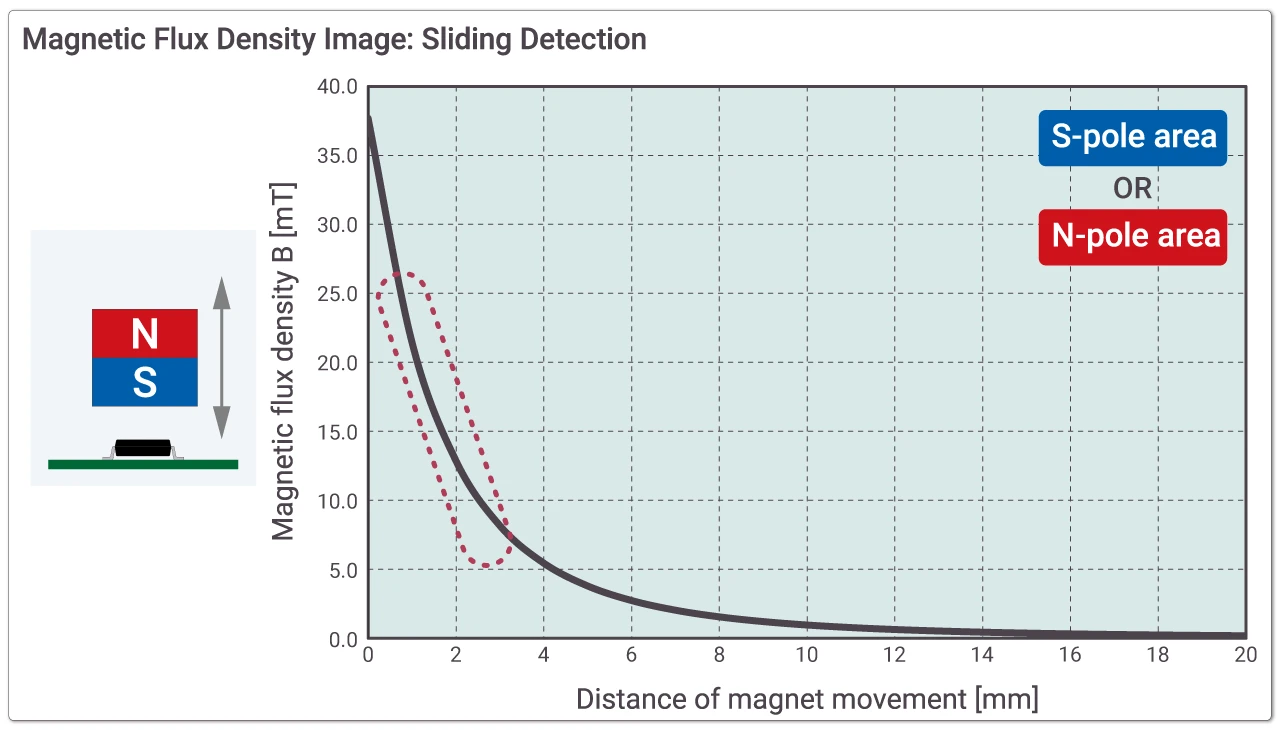
For sliding detection, magnets with either a horizontal or vertical magnetization can be used.
When the magnet moves closer to the IC, the output voltage increases (due to higher magnetic flux density), and when it moves away, the voltage decreases (lower flux density). Changing the magnetization direction or the size of the magnet allows the system to support a variety of movement patterns.
The figure below shows the output waveform for sliding detection. By using the dashed area of the output waveform, which is centered around the midpoint of the output voltage, linear sensing becomes possible. In addition, adjusting the magnet width allows the magnetic flux density characteristics to become either steeper or more gradual.
Magnetic Flux Density Illustration for Parallel and Vertical Movement Detection
4. Advantages of Non-Contact Position Sensing
Eliminating Design Concerns for Mechanical Volume Controls, Pedals, and Similar Components
No Risk of Contact Failure
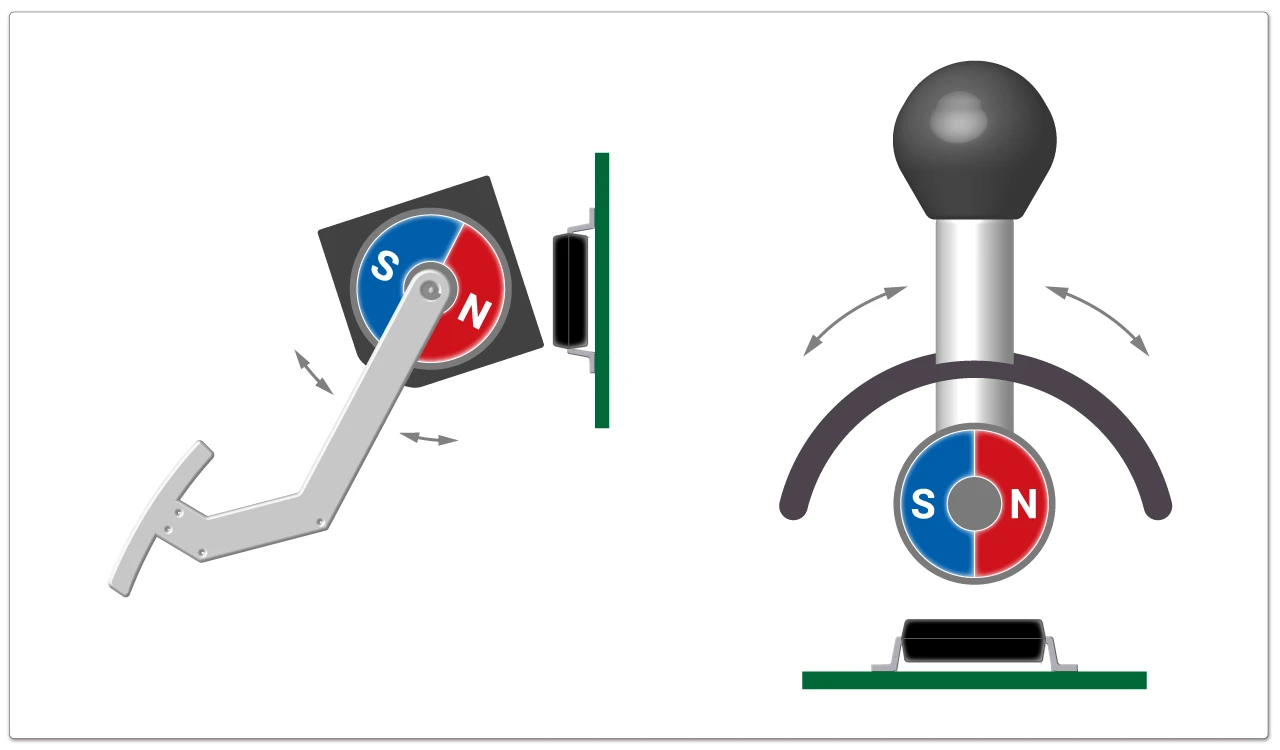
The resistor elements in mechanical volume controls (contact-type volume adjustment components) can become unstable over time due to degradation. In contrast, a linear Hall effect sensor IC detects position without physical contact, making it immune to contact failure.
Stable Operation Even in Harsh Environments
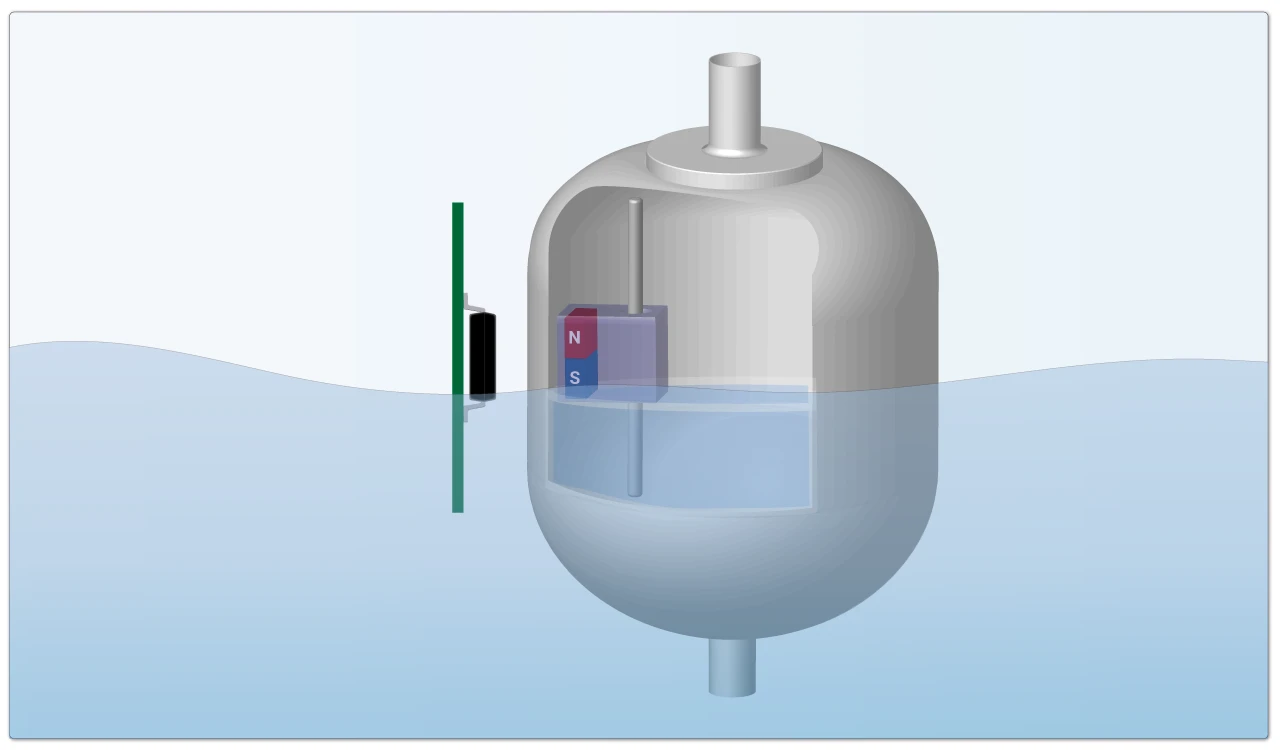
Stable detection is possible even in harsh environments exposed to dust, sand, or water when the magnet and the IC are sealed with molding or coating. This eliminates concerns that the degree of rotation or sliding may not be detected properly. Furthermore, applications that allow the replacement of multiple Hall effect switche ICs with a single linear Hall effect sensor IC are also possible.
5. Alternative Uses - Application Examples for Rotational/Sliding Amount Detection
Multi-Contact Switches (Shift Lever/DMM (Digital Multimeter))
When Used as a Selector
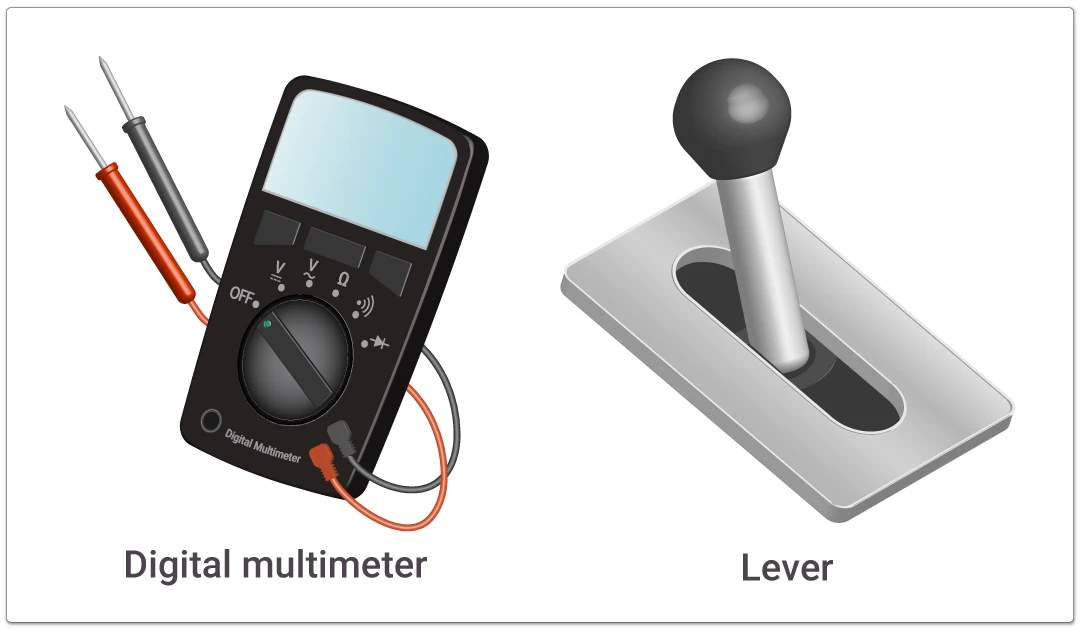
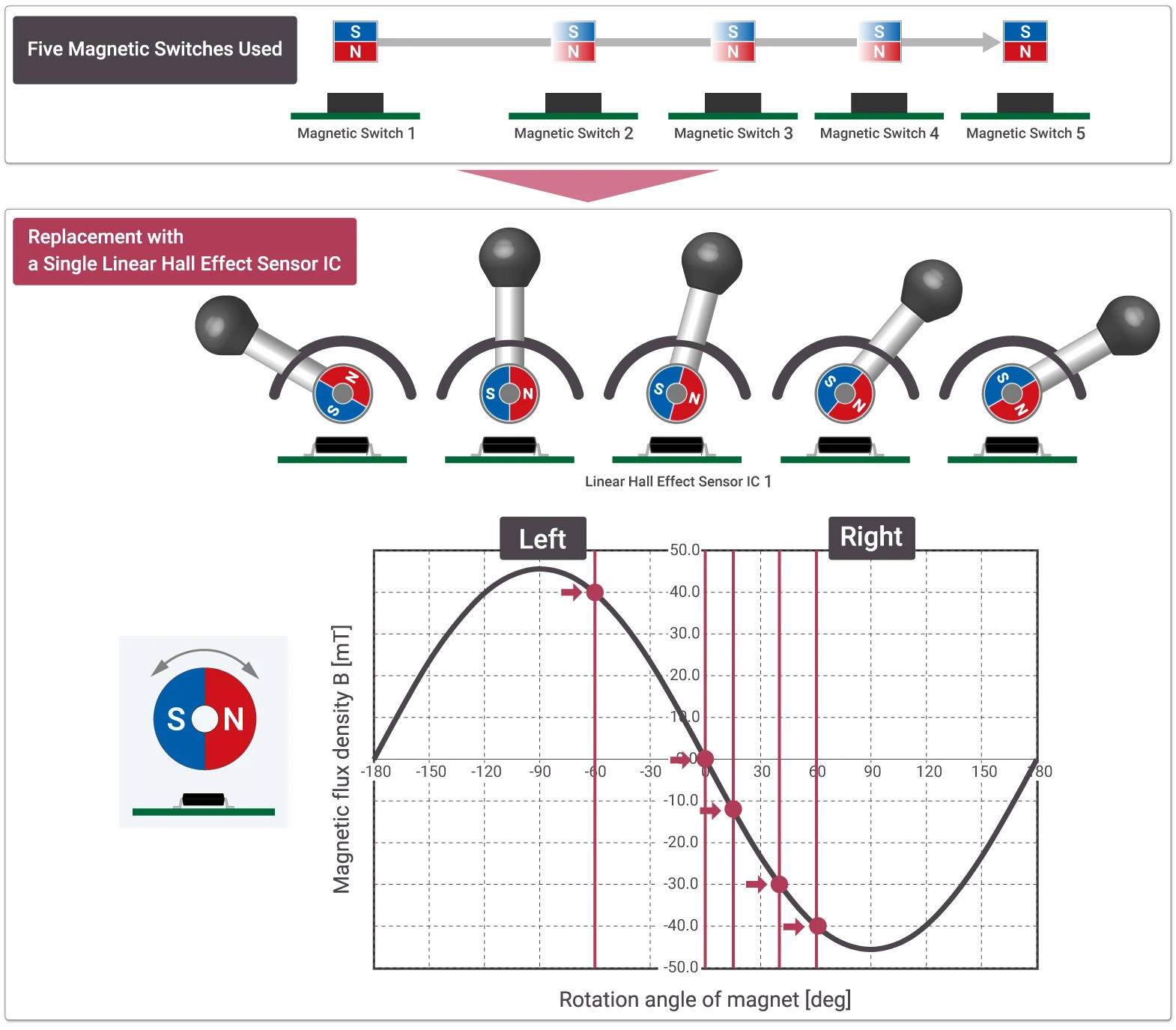
Position detection is possible by dividing the linear detection range of the linear Hall effect sensor IC so that multiple positions can be distinguished. A voltage range is preset for each switching position, and the IC outputs a voltage within that range. By having the MCU monitor this voltage, non-contact position determination becomes possible.
Because there is no concern about contact failure, this method offers extremely high durability.
When Using Multiple Magnetic Switches (e.g., 5-Position)
A single linear Hall effect sensor IC can replace these switches and provide equivalent functionality.
Sliding Position Detection (Float Sensor 1)
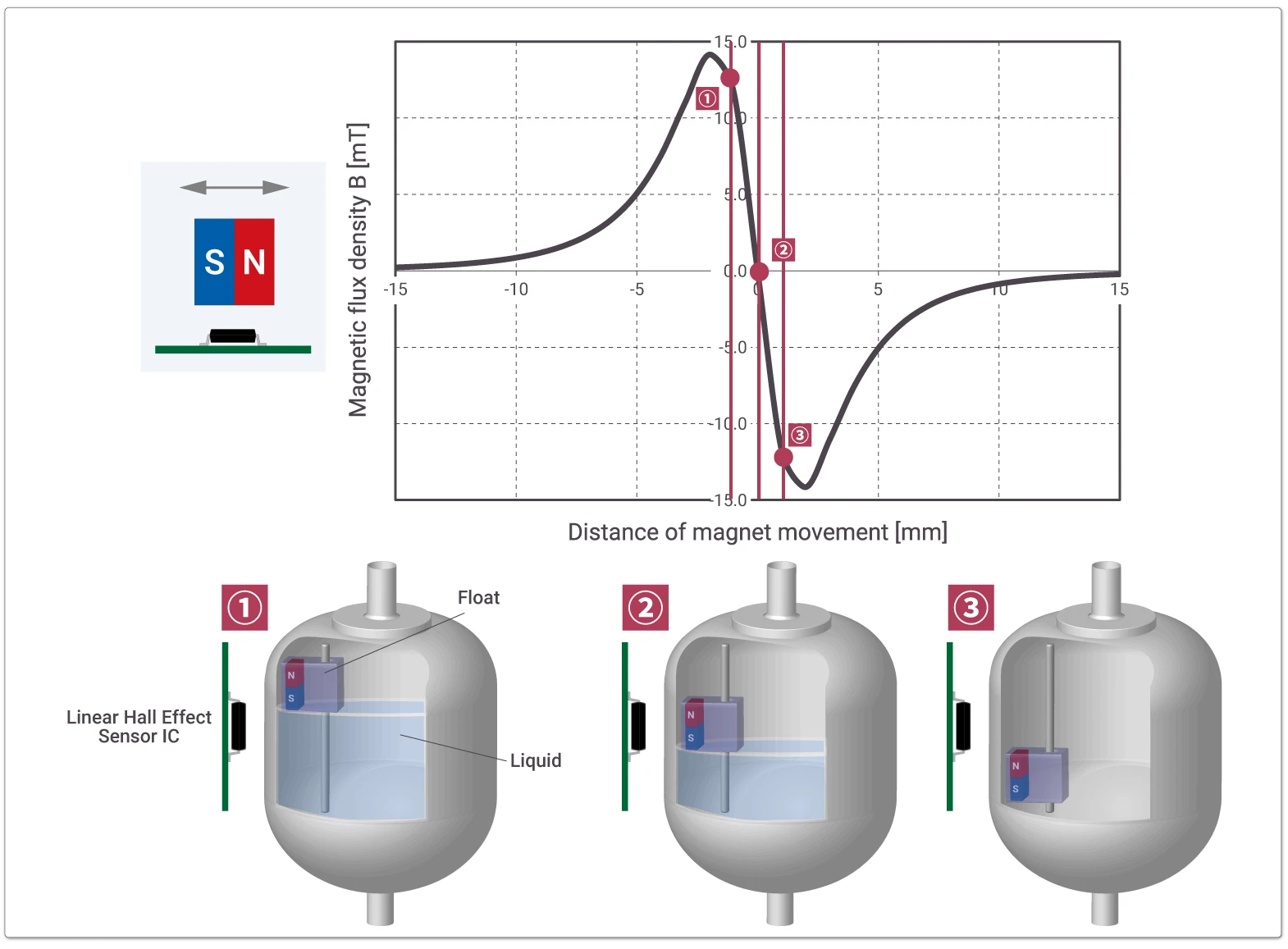
The linear Hall effect sensor IC detects changes in magnetic flux density from the magnet embedded in the float and outputs an analog voltage. By adjusting the magnetization direction and the size of the magnet, the system can accommodate various movement patterns. Because the peak voltage is high, this configuration enables high-sensitivity detection.
Rotational Position Detection (Float Sensor 2)
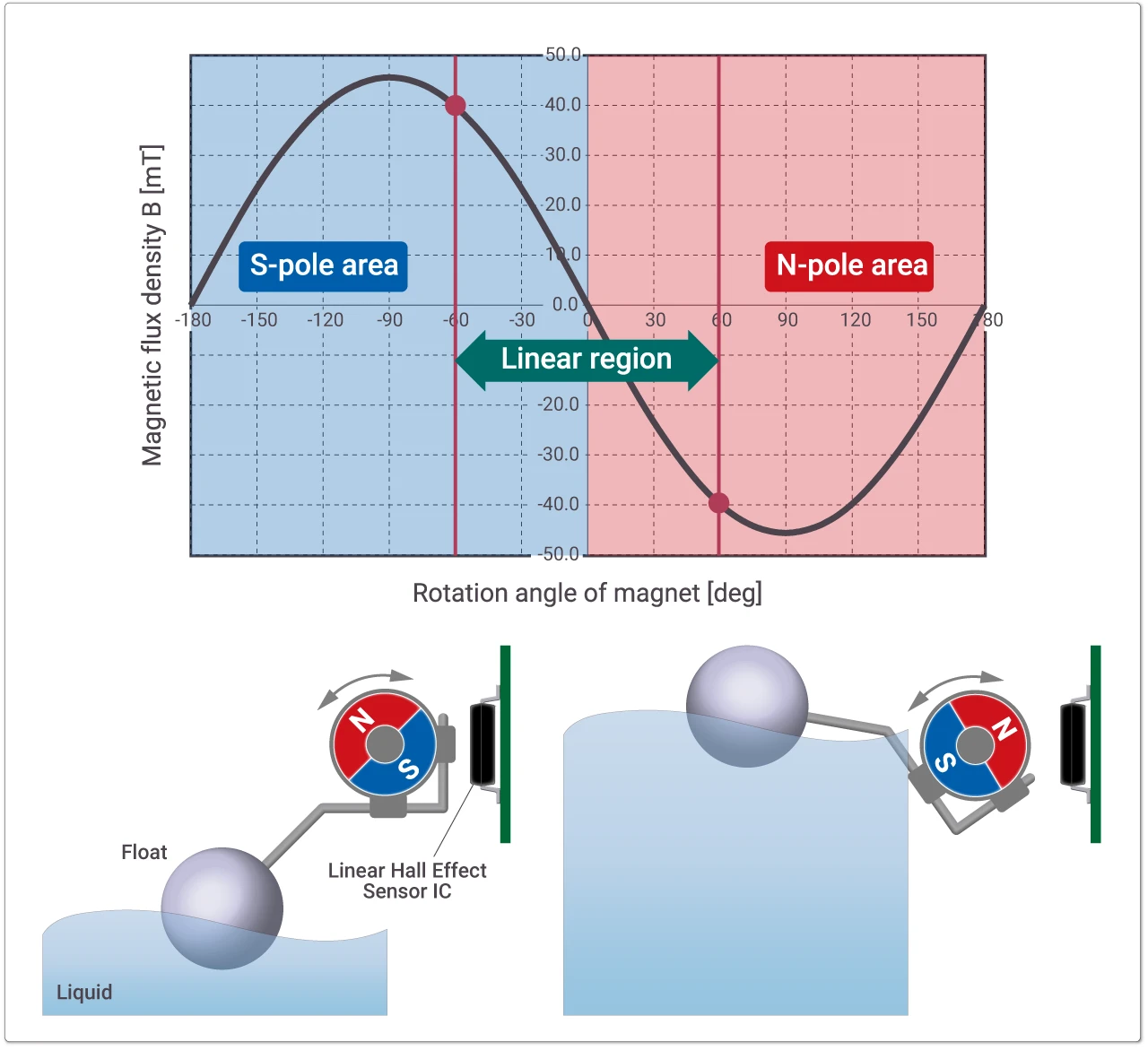
The float moves up and down according to the liquid level. The magnet embedded in the float is positioned so that it rotates around an axis as the float moves. The linear Hall effect sensor IC detects changes in magnetic flux density and outputs them as an analog voltage. By having the MCU monitor this voltage, position determination becomes possible. In this configuration, the resulting voltage change is more gradual than in the sliding position detection method described earlier.
Rotational Position Detection (Pedal Depression Amount Detection, Volume Knob Rotation Detection)
The output changes according to the subtle amount of pedal depression. The magnet embedded inside the mechanism is positioned so that it rotates around an axis from the default position. The product is controlled based on the output corresponding to the detected magnetic flux density.
This functionality can be applied to rotational position detection applications, such as volume knobs, where the adjustment angle is typically between 0° and 120°. It is also possible to detect rotational positions up to approximately 0° to 180° in cases where output linearity is not required.
6. Need Help with Magnetic Design?
Introducing Our Magnetic Simulation Service
ABLIC offers a aagnetic simulation service that provides the ideal combination of magnets and our magnetic sensor ICs for customer systems.
By using this service, you can lower the hurdles associated with magnet design and check the operational behavior of both the magnet and the magnetic sensor ICs before prototyping. This upfront verification helps reduce the number of prototypes required, shortens the development period, and lowers development cost, contributing to the optimization of components for improved cost performance.
7. Try Out ABLIC's Linear Hall Effect Sensor ICs
| S-5611A Series | Programmable, fast-response | Buy Online (Price and Stock)     |