
It is pleased to introduce the coverage of Mr. Seiji Tanaka, president from ABLIC by EE Times as of March 17th, 2026, a leading online media for the electronics industry in the United States of America and European market as follows.
ABLIC Expands Market Presence with High-Value Analog Solutions in Europe and the US
ABLIC develops high-value-added analog semiconductors and has become a global leader in niche fields. Over the past few years, the company has laid the groundwork for business expansion through acquisitions and organizational restructuring. In 2026, ABLIC is poised to translate these efforts into a clear growth trajectory while accelerating business expansion in Europe and the United States. We spoke with Seiji Tanaka, Representative Director and President of ABLIC, about the company's strategy.
●Maintaining a highly profitable structure with an operating profit margin of over 30% while achieving double-digit sales growth
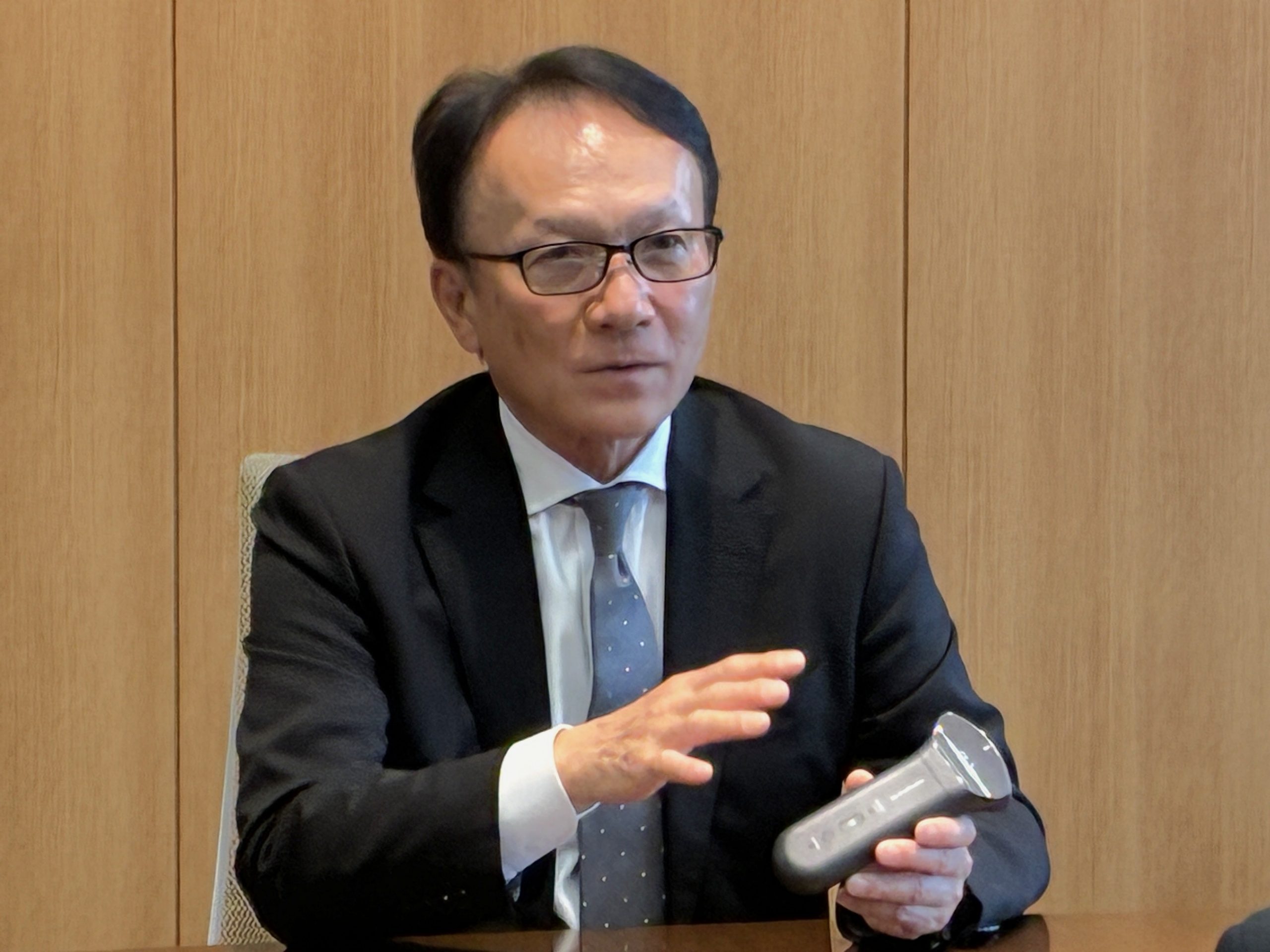
- What are your thoughts as you look back on 2025?
Seiji Tanaka:Despite challenging market conditions, we achieved positive sales growth for two consecutive years, FY2023 and FY2024. Sales are again projected to increase by more than 10% in FY 2025 compared to FY 2023. Our operating profit margin remains above 30%, and we plan to reinvest this profit to continue delivering valuable products to our customers.
- What do you see as the reasons for such strong performance?
Tanaka:Our strategy to become a global leader in niche fields through high-value-added products is proving successful. While the smartphone market, one of our target markets, is subject to fluctuations, it also provides relatively stable demand. Our medical-related business is also performing well. Another factor contributing to our success is extremely wide range of applications for our products. Our business stability is underpinned by the fact that our products are not dependent on a single use but serve diverse applications.
– How do you see market conditions in 2026?
Tanaka: My understanding is that industrial equipment inventory levels have finally returned to appropriate levels. In the analog semiconductor market, World Semiconductor Market Statistics (WSTS) forecasts 7.5% year-over-year growth, which suggests that the market may be entering a recovery phase. However, no single application is clearly driving a sharp overall upturn, and I believe that full-scale recovery will be gradual.
● Expanding the automotive product lineup; CLEAN-BoostTM is expected to be introduced in data centers
– Given this context, what is your medium- to long-term business strategy for 2026 and beyond?
Tanaka: Our overall strategy remains unchanged: we aim to become a global niche leader while increasing profits through high-value-added products that use analog semiconductors and through analog-digital integration that incorporates digital peripheral circuits into analog semiconductors. By combining this with production capacity optimization, and streamlined development, and investment in human resources, we intend to help customers develop next-generation products.
– Tell us about your specific product strategy.
Tanaka: We are focusing on five areas: lithium-ion battery protection ICs, power management ICs for automotive applications, medical and high-voltage applications, Hall effect ICs (magnetic sensor ICs), and battery-less water leak sensors using CLEAN-BoostTM technology.
For lithium-ion battery protection ICs, which currently account for a large proportion of sales, we will focus on automotive secondary battery monitoring ICs and monitoring analog front-end ICs for large-scale storage batteries. The latter are under development, and sample supply will begin shortly.
With regard to power management ICs for automotive applications, we will expand our lineup for 48V auxiliary batteries. In September 2025, we announced the S-19230, an 80V-rated LDO linear regulator with a low operating current consumption of 2.0μA. While overseas analog semiconductor manufacturers are ahead of us in this field, ABLIC is actively working to expand its lineup of Japan-made products. We are also focusing on high-current automotive DC-DC converters, which represent a large market, and will expand our product lineup in this area.
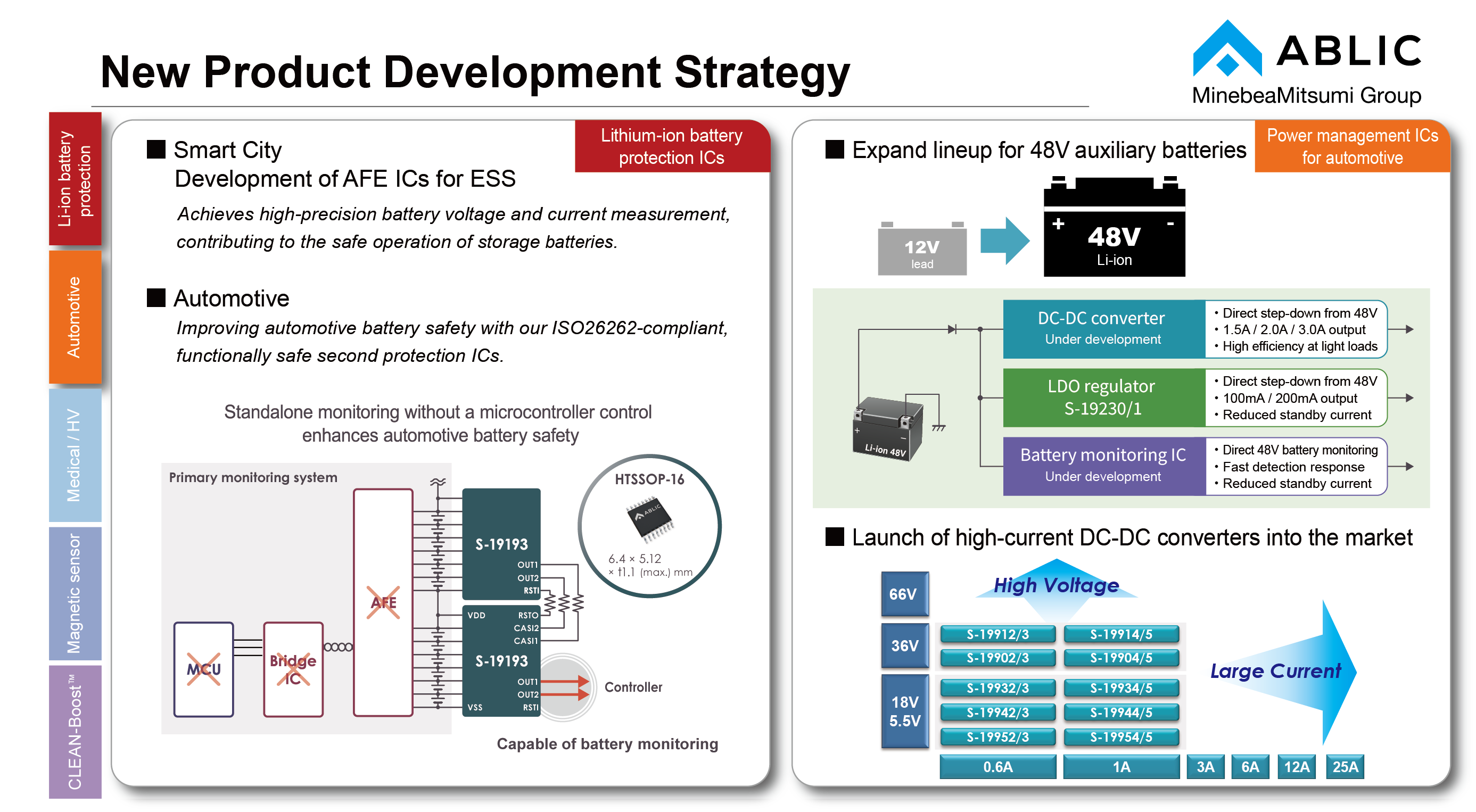 Examples of new product development strategy. (Courtesy of ABLIC)
In the Hall effect IC field, we are seeing strong demand for automotive 2D dual Hall effect latch ICs, which we released in September. This single-chip device can detect both horizontal and vertical axes, has a wide range of applications, and is an example of technology that is likely to see wider use in the future.
– In the medical field, you acquired the medical-related business of Socionext in 2024.
Tanaka: We inherited technologies for wireless handheld ultrasound diagnostic systems, including transmitter and receiver ICs and advanced receiver technology. By integrating the receiver technology with existing transmitter ICs and high-voltage switches, we established a platform capable of providing complete transmitter and receiver solutions. We have begun mass production of second-generation solutions for ultrasound diagnostic equipment characterized by lower power consumption and higher resolution. This business is poised for significant growth.
● We are seeing positive results with automotive applications in Europe, and we are also expanding CLEAN-BoostTM technology overseas
– You are also aggressively expanding business in Europe and the United States.
Tanaka: In the European automotive business, we have expanded our distributor network and increased investment in field application engineers and other resources, initiatives that are beginning to generate new projects. There is definite potential for our analog semiconductors' high-precision, low-power technology to make significant contributions in such areas as functional safety and power saving, which are key priorities in the European market. We believe that a recovery in the European automotive market will lead to increased sales.
In the United States, we already have an established level of business outside the automotive sector, including the medical and industrial equipment sectors, and we continue to pursue expansion into next-generation applications. Our technical support, in particular, has been highly praised for its attentive service despite long distances. We plan to leverage these strengths to meet the needs of the US market.
To establish a foothold in Europe and the US markets, we have begun selling battery-less water leak sensors using the CLEAN-BoostTM technology already deployed in Japan. The communication range has been extended to approximately 100–200 m (roughly double the previous range), and the maximum operating temperature has been increased from 60ºC to 85ºC. The sensors are also highly regarded for their battery-less wireless communication capabilities and high sensitivity.
The data center sector is an area where expectations are particularly high. As AI servers become more widespread, water-cooled systems are being increasingly adopted, driving a surge in demand for leak prevention solutions. In Europe, with its many historic buildings, there is a strong demand for retrofitting and upgrading existing facilities with the latest technology while preserving their original structures. These sensors, which require no wiring work and can be retrofitted into existing facilities, are well-suited for data centers transitioning to water cooling, the preservation of cultural buildings and infrastructure, and for smart upgrades of factories that cannot afford to halt operations. We aim to promote its adoption of this solution to protect valuable assets while contributing to the environment sustainability by reducing waste batteries.
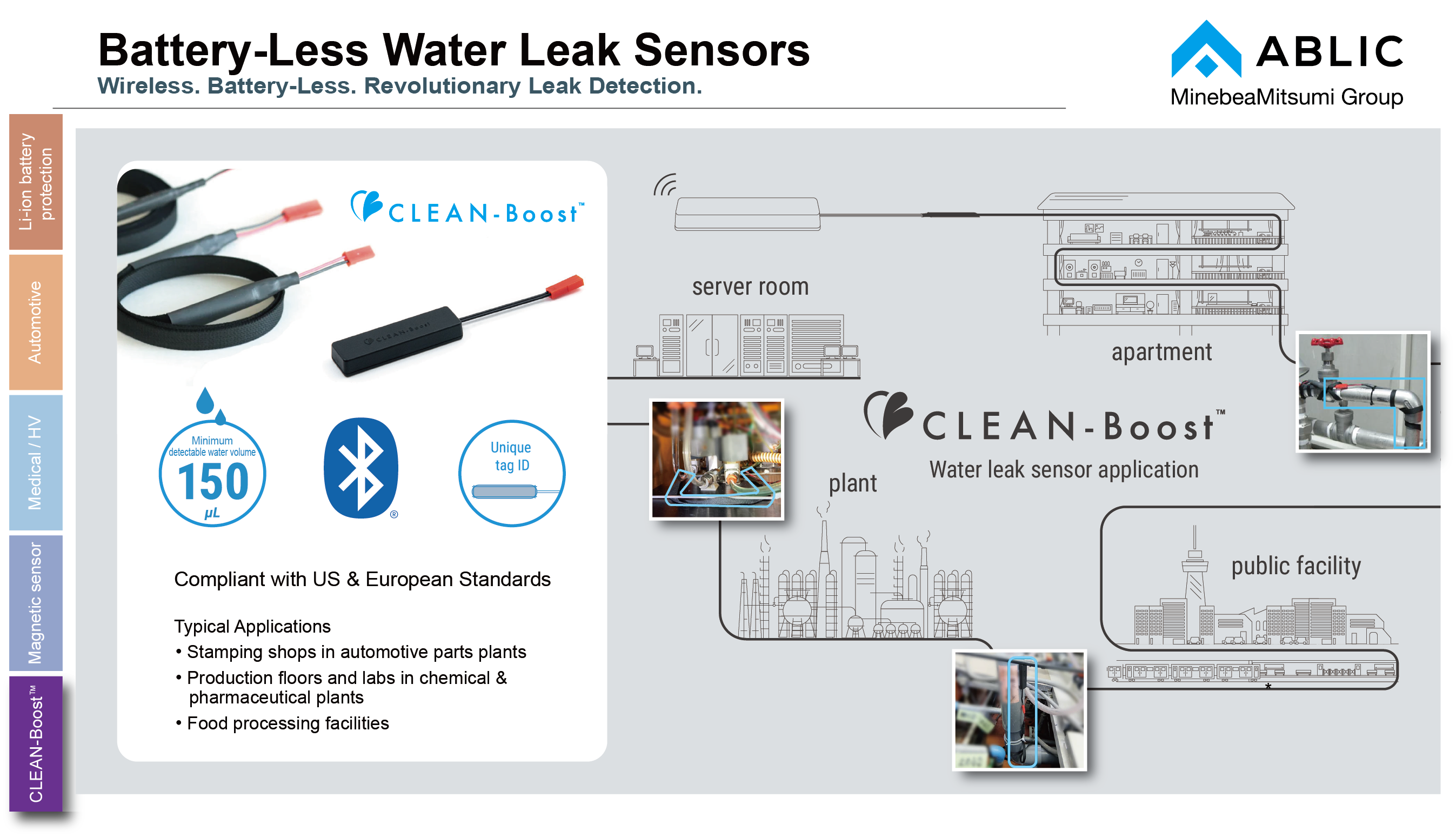 Possible uses of battery-less water leak sensors. (Courtesy of ABLIC)
● New organizational structure will drive the company's growth trajectory; ambitious performance targets have been set
– What can you tell us about capital investments?
Tanaka: We will make effective use of existing fabrication facilities (fabs) within the MinebeaMitsumi Group and will also outsource production for certain products as needed. Initiatives to improve manufacturing efficiency are also underway in the three Group companies that handle semiconductors. With access to excellent in-house fabs, we will leverage these assets to achieve high-quality, efficient manufacturing.
In 2024, we revamped the organizational structure to support medium- to long-term strategy and strengthened our framework to enhance product development capabilities. From 2026 onward, we expect to begin seeing results. Our core policy for 2026 is to put our growth strategy, centered on the new organization, firmly on track. We have also set ambitious performance targets for the company in terms of performance. To support this, we will introduce a job-based personnel system to enhance overall company performance. We will strengthen our human resources in both analog semiconductors and software and further expand our business, while also considering acquisitions where combining business and technology creates a “1 + 1 = 3” synergy.
This article was originally published in EE Times on March 17, 2026.
The previous interview is also available HERE.
● For further inquiry, contact here.
.